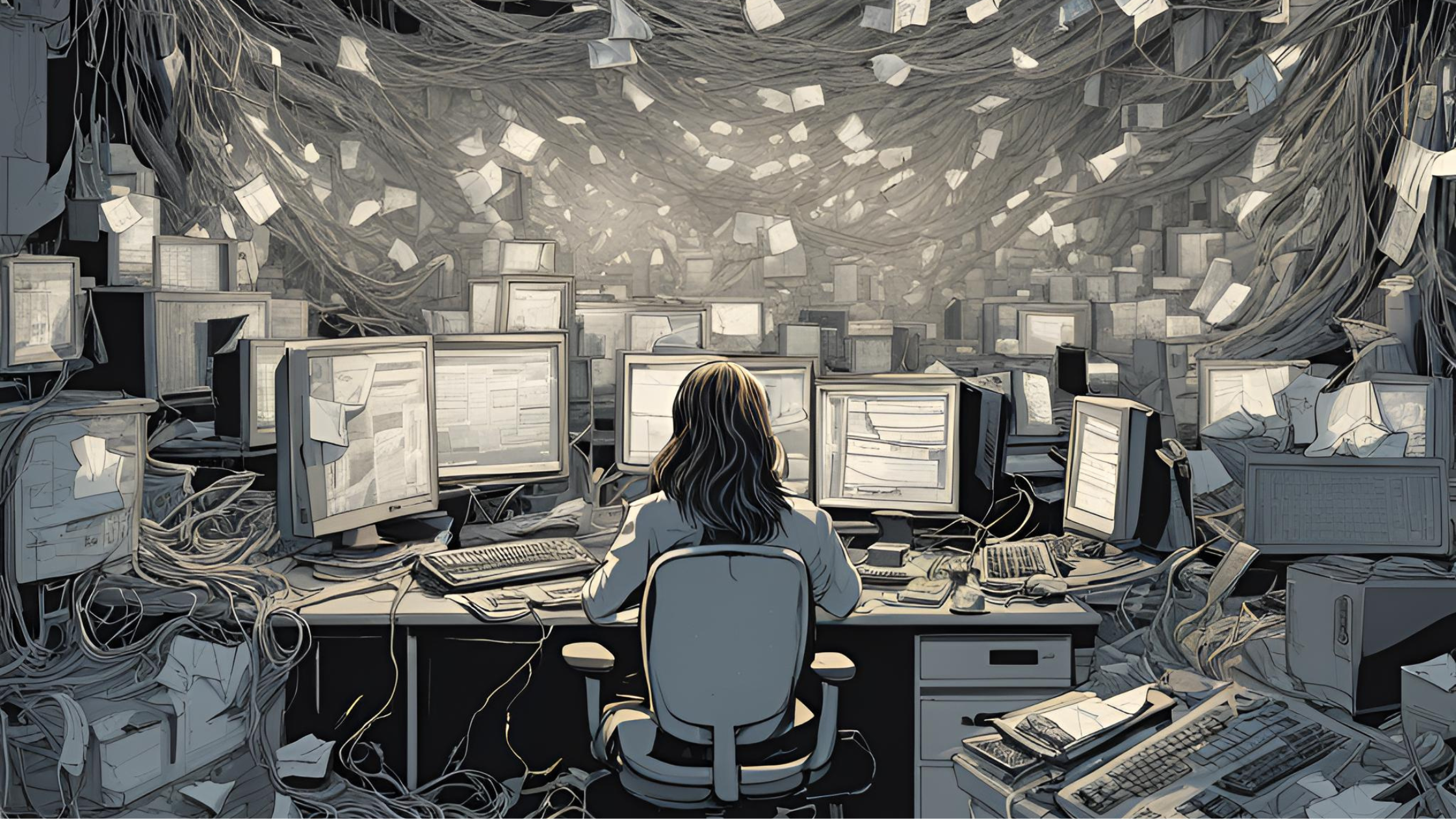
Sarah, a regional bank CTO, stared at her quarterly budget report with growing concern. Three-quarters of her IT budget was locked into maintaining legacy COBOL systems, leaving precious little for innovation. Her team of talented developers spent their days wrestling with decades-old code instead of building the future of banking. She knew something had to change, but the path forward seemed daunting.
Sarah’s story isn’t unique in the financial sector. According to the Federal Deposit Insurance Corporation’s latest analysis, banks spend up to 75% of their IT budgets maintaining legacy systems (FDIC Quarterly Banking Profile, 2023). This staggering figure represents more than just a financial burden – it’s a barrier to innovation, growth, and competitive advantage.
The True Cost of Technical Debt
The impact of technical debt extends far beyond the balance sheet. Research from the Federal Reserve Board shows that financial institutions lose an estimated $300 billion annually due to technical debt and legacy system maintenance (Federal Reserve Economic Data, 2023). But the real story lies in the day-to-day impact on your teams and operations:
Time Lost to Legacy Maintenance
- Engineers spend 33% of their time managing technical debt instead of innovating
- Development teams waste between 23% and 42% of their time addressing legacy issues
- CIOs report 10-20% of new product technology budgets are consumed by existing technical debt
The Human Cost
Behind these numbers are real people facing real challenges:
- Decreased job satisfaction as skilled developers spend time on maintenance rather than creation
- Difficulty attracting and retaining top talent who prefer working with modern technologies
- Reduced innovation capacity as teams focus on keeping old systems running
- Increased stress from managing high-risk legacy systems
Breaking Free: The Path Forward
The journey to modernization doesn’t have to be a solo venture. Just as Sarah discovered, there’s a way to transform legacy burden into competitive advantage through AI-human collaboration. Here’s what forward-thinking organizations are doing:
- Assessment and Strategy
- Evaluate the true cost of technical debt in your organization
- Identify high-impact, low-risk areas for modernization
- Create a roadmap that balances stability with innovation
- Leveraging AI-Human Collaboration
- Deploy AI agents for routine maintenance and monitoring
- Free up human talent for strategic initiatives
- Maintain system stability while reducing operational costs
- Cultural Transformation
- Embrace continuous learning and experimentation
- Foster a culture of innovation and calculated risk-taking
- Build teams that combine human insight with AI capabilities
Taking the First Step
The path to breaking free from technical debt starts with a simple question: How much is legacy code really costing your organization? Consider these points:
- What percentage of your IT budget goes to maintenance versus innovation?
- How much time does your team spend managing legacy systems?
- What opportunities are you missing due to technical debt?
Looking Ahead
The financial sector stands at a crossroads. According to the American Bankers Association, institutions that have modernized their legacy systems show 2-3 times faster revenue growth compared to their peers (ABA Banking Journal, 2023). The question isn’t whether to address technical debt, but how to do it effectively and safely.
Your organization doesn’t have to navigate this transformation alone. Modern solutions exist that combine human expertise with AI capabilities to help break free from the burden of legacy code. The future belongs to those who can transform their technical debt into technical wealth.
Ready to start your journey? Learn how Legacy Rescue can help you assess your technical debt and create a path forward. Contact us for a free consultation and discover how AI-human collaboration can transform your legacy systems into competitive advantages.
About Legacy Rescue: We specialize in helping financial institutions break free from legacy code through innovative AI-human collaborative solutions. Our approach combines cutting-edge technology with deep industry expertise to help organizations reduce maintenance costs, increase innovation capacity, and empower their teams.

0 Comments